Packing lingerie for a trip should protect its shape, not merely save suitcase space. The central question is how to pack lingerie for travel without damaging cups, underwires, lace, or delicate straps. A crushed molded bra may look acceptable in your luggage, then lose its smooth profile by evening. That small mistake can affect comfort and fit.
Cora Harrington, lingerie author and founder of The Lingerie Addict, has often emphasized that lingerie deserves thoughtful care because it is designed for the body. Her practical message is simple: “Treat lingerie as clothing, not as an afterthought.” This principle guides the packing methods in this article. Empty bra cups should be stacked carefully, never folded inward. Soft underwear can fill the space around them. A clean pouch can separate silk from rough zippers and shoe soles.
Small details matter.
Place each molded bra inside a structured packing cube or the original box. Fasten hooks loosely to prevent snagging. Keep straps inside the cups, where they cannot catch on jewelry. For lace pieces, use a breathable fabric bag instead of a sealed plastic pouch. Heat and trapped moisture can create unpleasant odors after a long journey.
Still, no packing method is perfect. Overstuffing a suitcase can deform even a carefully arranged cup. I have also found that “space-saving” rolling advice often fails with molded bras. It saves room, but the result may be permanent creases. Check the suitcase after packing. Leave the top layer relaxed, and reconsider any item pressed beneath shoes, chargers, or cosmetics. Your lingerie needs less force and more room.
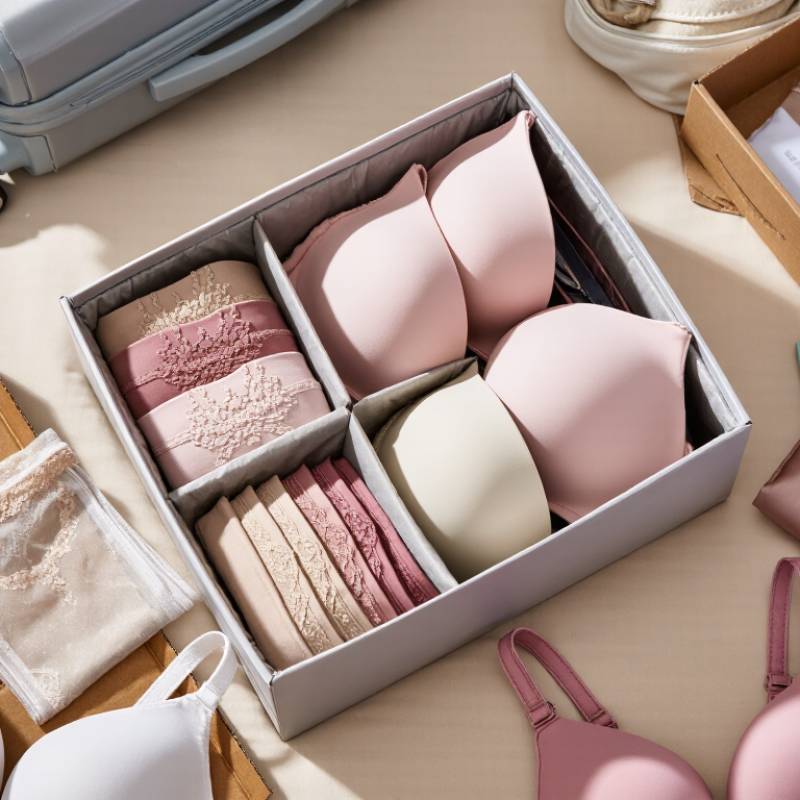
The best packing method depends on the cup structure, not only the bra size. Soft bralettes and unlined lace bras can lie flat without much risk. Fold each wing inward, then place the straps inside the cups. Keep them near the top of your suitcase, away from shoes, zippers, and rough fabrics. I have found that loose packing prevents creases better than tight rolling.
Molded, padded, or push-up cups need more care. Never fold one cup into the other, because that can create permanent dents. Instead, stack the bras flat and fill each cup with rolled socks or a soft camisole. This keeps the shape supported without adding heavy pressure. For larger cup sizes, use a lingerie pouch with a firm, flat base. It reduces crushing when the suitcase is moved.
Underwire styles should stay flat whenever possible. Place them between two lightweight clothing layers, but avoid pressing down with belts or toiletry cases. A small suitcase can make this difficult. I sometimes bend the wings slightly by accident, so I now check the wires before closing the case. That extra moment helps. Still, no method is perfect. Delicate lace may snag, and molded foam can crease when packed too tightly. Freshly washed pieces should be fully dry before storage, since trapped moisture can leave odors and weaken elastic.
Before lingerie enters a suitcase, clean every piece according to its care label. Hand washing in cool or lukewarm water usually protects delicate fibers better than aggressive machine cycles. Use a small amount of mild detergent. Rinse until the water runs clear. Skip bleach, fabric softener, and strong fragrance products. Residue can irritate skin and weaken elastic over time.
Press each item gently between clean towels; never twist cups or stretch the band. Air-dry lingerie completely in a shaded, well-ventilated place. Heat from radiators and hair dryers may distort molded cups. It must feel fully dry. Before folding, inspect the seams, underwire channels, clasps, and straps. Remove lint and treat stains before travel, because heat and pressure can set them.
Close hooks to prevent snagging. For molded bras, stack the cups inside one another only when the shape remains supported. Otherwise, place soft tissue inside each cup and lay the bra flat. Do not crush it under shoes or heavy chargers. I once packed a slightly damp camisole and regretted it; the enclosed smell was difficult to remove. A rushed fold can also leave a stubborn crease. That experience changed my routine. When time is short, drying fully matters more than making a precise fold.
| Step | Task | Recommended Timing | How to Do It | Why It Matters | What to Avoid |
|---|---|---|---|---|---|
| 1 | Check the care label | Before washing | Confirm the recommended water temperature, washing method, drying instructions, and whether the garment should be hand-washed. | Care labels provide garment-specific instructions that help prevent shrinkage, color loss, and fabric damage. | Do not assume every lace, silk, satin, or molded-cup item can be machine-washed. |
| 2 | Separate by color and fabric | Before washing | Keep dark, light, and white garments separate. Wash delicate fabrics apart from rough items such as denim, towels, and garments with zippers. | Separation reduces dye transfer, abrasion, snagging, and lint buildup. | Do not pack damp or freshly washed lingerie together with dry clothing. |
| 3 | Close fasteners | Before washing | Fasten bra hooks and eyes, close clasps, and place removable pads in the correct position. | Closed fasteners are less likely to catch lace, mesh, or elastic during washing and packing. | Do not leave hooks open near delicate fabrics. |
| 4 | Use gentle washing conditions | On wash day | Use cool or lukewarm water and a mild detergent. For machine washing, place delicate items in a mesh laundry bag and select a gentle cycle when permitted by the care label. | Lower agitation and moderate water temperatures help protect elastic fibers, lace, and molded cups. | Avoid bleach, harsh detergents, and high-agitation cycles unless specifically allowed by the care label. |
| 5 | Rinse thoroughly | Immediately after washing | Rinse until no visible detergent remains. Press the garment gently to remove excess water instead of twisting it. | Residual detergent can irritate skin and may leave fabric stiff or discolored. Twisting can deform cups and stretch elastic. | Do not wring molded cups, underwire bras, or lace garments. |
| 6 | Dry completely | Before packing | Shape the cups with clean hands, lay the garment flat or hang it according to the care label, and allow it to dry fully in a well-ventilated area. | Complete drying helps prevent mildew, musty odors, and moisture-related fabric damage. | Do not pack even slightly damp lingerie or leave it in a sealed plastic bag while wet. |
| 7 | Inspect before packing | Packing day | Check for dampness, stains, loose threads, damaged hooks, bent underwires, and distorted cups. | Inspection prevents damaged items from rubbing against or snagging other garments during travel. | Do not pack garments with wet stains or sharp exposed hardware. |
| 8 | Protect molded cups | During packing | Stack bras with the cups facing the same direction. Place soft underwear, socks, or a small rolled garment inside the cups to support their shape. | Support reduces crushing, folding, and permanent creasing in molded or padded cups. | Never fold one molded cup sharply into the other or place heavy items directly on top. |
| 9 | Use breathable organization | During packing | Place lingerie in a clean breathable packing cube, cotton pouch, or dedicated compartment. Keep clean and worn items separate. | Organization limits friction, maintains hygiene, and makes delicate pieces easier to find. | Avoid airtight storage for garments that are not completely dry. |
| 10 | Pack by weight | Final suitcase setup | Place lingerie near the top of the suitcase, away from shoes, toiletries, and heavy electronics. Keep hard-edged objects in separate compartments. | Reducing pressure and contact with rough or heavy objects helps preserve cups, lace, and elastic. | Do not place shoes, books, or toiletry bottles directly on molded cups. |
| 11 | Manage temperature and compression | Throughout travel | Keep the suitcase away from prolonged heat and avoid overfilling it. If using compression luggage, leave enough space so cups are not crushed. | Excessive heat and compression can worsen creasing, deform foam cups, and stress elastic components. | Do not leave packed lingerie in a hot vehicle for extended periods. |
| 12 | Unpack promptly | After arrival | Remove lingerie from the suitcase, reshape cups by hand, and store items loosely in a clean, dry, ventilated drawer or organizer. | Prompt unpacking reduces prolonged compression and helps prevent trapped odors or moisture. | Do not leave lingerie compressed in luggage for several days after reaching your destination. |
A well-packed bra needs structure, not pressure. Place each bra flat with the cups facing upward. Do not fold one molded cup inside the other. That sharp bend can create permanent creases. Instead, stack bras gently and fill each cup with soft underwear or a clean T-shirt. The fabric supports the curve without forcing it.
Tip: Build a soft layer. Put bras between pajamas or thin knitwear, away from shoes, belts, and cosmetics. Textile Exchange’s 2024 Materials Market Report estimates that global fiber production reached 124 million tonnes in 2023. Careful packing helps extend the useful life of these materials, even when the statistic is not lingerie-specific. Use a breathable pouch for delicate lace. Avoid compression cubes for molded cups.
A simple packing test works well. After closing the suitcase, press lightly on the bra stack. It should spring back, not flatten. Keep straps tucked inside the band, but do not knot them. I once packed a molded cup beneath a heavy toiletry case. The cup looked fine at first, then developed a faint ridge. I should have checked the suitcase pressure earlier. The Ellen MacArthur Foundation has reported that clothing utilization has fallen sharply over recent decades, making gentle handling more important. Still, this method is not perfect for every fabric. Very soft cups may need individual spacing, especially during long travel.
Protect molded cup shape by keeping bras flat, avoiding sharp folds, filling empty cup space with soft garments, and placing cushioning layers above and below.
The chart presents a practical five-layer packing sequence. Layer 1 is packed first at the bottom, while Layer 5 is added last on top. Keep cups facing upward and avoid turning molded cups inside out.
Packing lingerie well protects its shape, fabric, and fit during travel. I place each bra near the top of my suitcase, never beneath shoes or heavy books. Molded cups need special care. I gently fold one cup into the other, then fill the space with rolled socks or a soft sleep shirt. This prevents crushing without stretching the band.
I fasten the hooks before packing. Loose hooks can catch delicate lace or mesh. Panties lie flat inside the cups or between folded shirts. A clean fabric pouch keeps small pieces together and reduces friction. I avoid overfilling the suitcase, because pressure builds quickly around structured cups. Leave some breathing room.
Keep it simple.
For longer trips, I separate light everyday pieces from structured lingerie. This makes dressing easier and limits repeated handling. I also check the suitcase after packing, pressing lightly across the top. If the cups feel compressed, I rearrange the layers. I used to rely on thin plastic bags, but they trapped moisture after humid journeys. Breathable fabric works better in my experience. Still, I sometimes pack too much and create unnecessary pressure. A quick adjustment before closing the case can prevent that mistake.
When lingerie comes out of a suitcase, unpack it within a few hours. Start gently. Remove tissue, socks, or other items pressing against the cups. Hold each bra by the band, not the straps, and reshape molded cups with clean hands. Do not reverse one cup into the other, because that can create permanent creases.
A practical textile-care rule is to let damp lingerie air-dry completely before storage. Place it flat on a clean towel, away from direct sunlight and heaters. Inspect the seams, underwire area, and lace for trapped moisture or distortion. I once stored a bra too quickly after travel, and its cups kept a faint fold for weeks. That mistake changed how I pack and unpack delicate pieces.
Store bras in a drawer with enough space for the cups to keep their natural curve. Stack them gently without turning cups inside out. Fold soft lingerie loosely, while keeping structured pieces flat. A breathable fabric pouch can reduce dust, but sealed plastic may trap humidity. Keep lingerie away from rough zippers and heavy garments. Check the drawer every few weeks. Shape matters. Your storage routine may seem careful, yet crowded drawers can still stretch straps and flatten cups.
Lay them flat with the cups facing upward. Avoid sharp bends. A crease may become permanent.
Some travelers use this method gently, but it can distort the lower cup. Flat stacking is safer.
Fill each cup with soft underwear, rolled socks, or a clean T-shirt. Do not stretch the band.
Place them near the top, between pajamas or thin knitwear. Keep them away from shoes, belts, and hard objects.
Yes. Fastened hooks are less likely to catch lace or mesh. Tuck the straps inside the band without knotting them.
Usually, no. They can flatten structured cups. A breathable fabric pouch offers gentler protection.
Press lightly on the bra stack after closing the case. It should spring back, not feel flat.
Place them inside the cups or between folded shirts. This saves space and adds soft support.
No. Very soft cups may need separate spacing during long trips. I sometimes overpack, despite better plans.
Heavy toiletry cases can press ridges into molded cups. I learned this after checking too late. Repack earlier.
Learning how to pack lingerie for travel without damaging cups starts with choosing a method that matches each style. Soft, unstructured pieces can be folded gently, while molded or padded bras should be kept open or nested together to maintain their shape. Before packing, make sure every item is clean and completely dry. Fasten hooks, remove unnecessary accessories, and place delicate lingerie in a breathable pouch or lightweight fabric layer for added protection.
Arrange lingerie in a stable part of your suitcase, away from shoes, toiletries, and heavy objects. Avoid compressing molded cups or filling them with items that may create pressure or creases. Layer soft garments around structured pieces to prevent movement, then keep the suitcase from being overpacked. Once you arrive, unpack lingerie promptly, reshape the cups by hand, and store each piece flat or naturally supported. These simple steps help reduce wrinkles, preserve elasticity, and keep lingerie comfortable and ready to wear throughout your trip.
